

Every purchase can be the start of the next one
Connect each customer’s history to incentives, outreach and personalised service, and turn it into repeat business for your fashion brand.
Selling once does not mean the customer comes back
What is usually missing is not traffic: it is a reason for the second purchase to happen.
The customer buys once and never returns
The most expensive purchase to win is used up on a single ticket.
Different profiles get the same campaign
The frequent buyer is handed a discount; the one who left gets nothing that moves them.
Traffic depends on the broad promotion
Sales rise for a day and margin falls across the whole base.
The relationship rests on the associate’s initiative
When the associate moves store, their list goes with them.
The reward expires without bringing anyone in
The cost was already paid and the visit never happened.
Store and e-commerce run on different data
The balance from the website is not recognised at the till.
Nobody knows which campaign drove the repeat purchase
Without a control group, all you can count is messages sent.
Five ways to build the next purchase
The second purchase deserves its own strategy
The steepest drop in any base sits between the first and the second purchase. The journey starts at the identified purchase, not on the marketing calendar.
First purchase in store: a balance valid for 45 days and a reminder at day 30. The balance is there so she comes back, redeems it and buys again.
What to track First purchases that reach a second one, and the gap between them.
Growth Engine →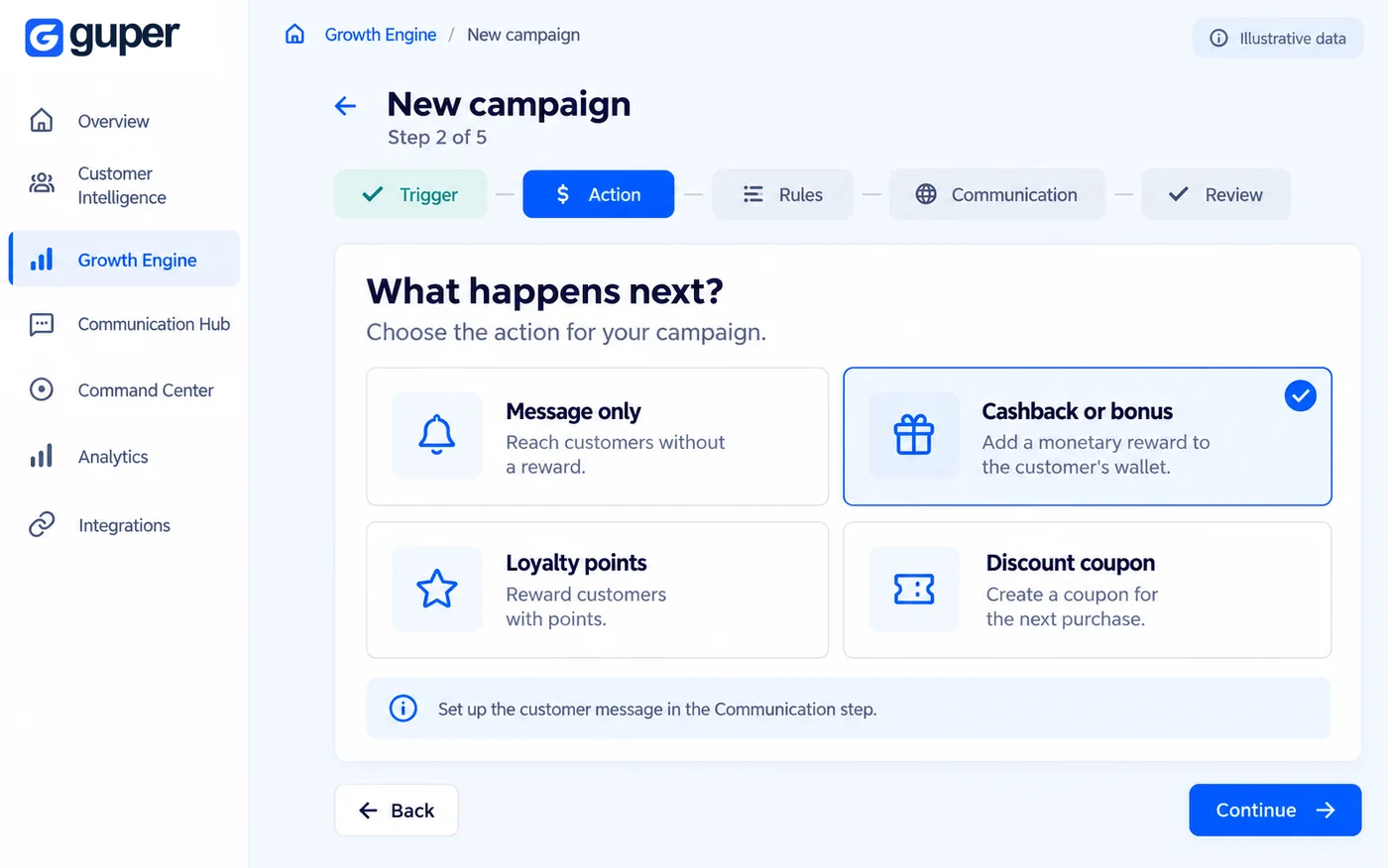
Reactivate at each customer’s own pace
A fixed window is enough when the cycle is even. When it is not, the cut-off comes from each customer’s actual interval.
Someone who buys every six weeks enters at 60 days. Someone who buys twice a year, at five months. Same campaign, two audiences.
What to track Return rate by audience, and how many come back without a second contact.
Customer Intelligence →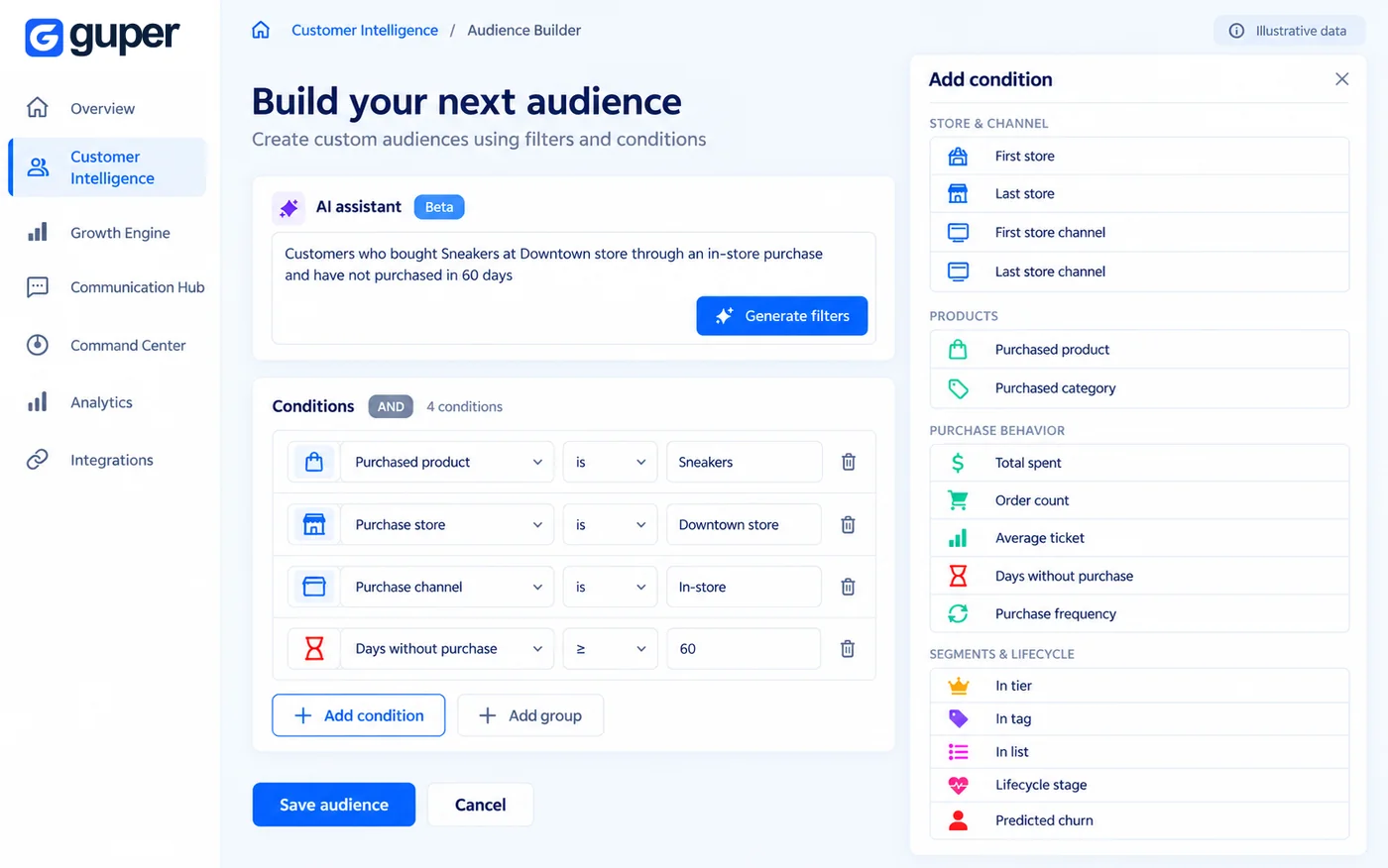
Invite them into another category
As long as a customer buys in one category only, their frequency has a ceiling. The category already bought sets the context for the next contact.
Someone who bought a bag 60 days ago and has never bought footwear enters a journey scoped to that category. The pairing is built on value and frequency; recommending by size or colour depends on that data arriving from the e-commerce platform or the point of sale.
What to track Categories per customer, and the basket of those who buy in more than one.
Growth Engine →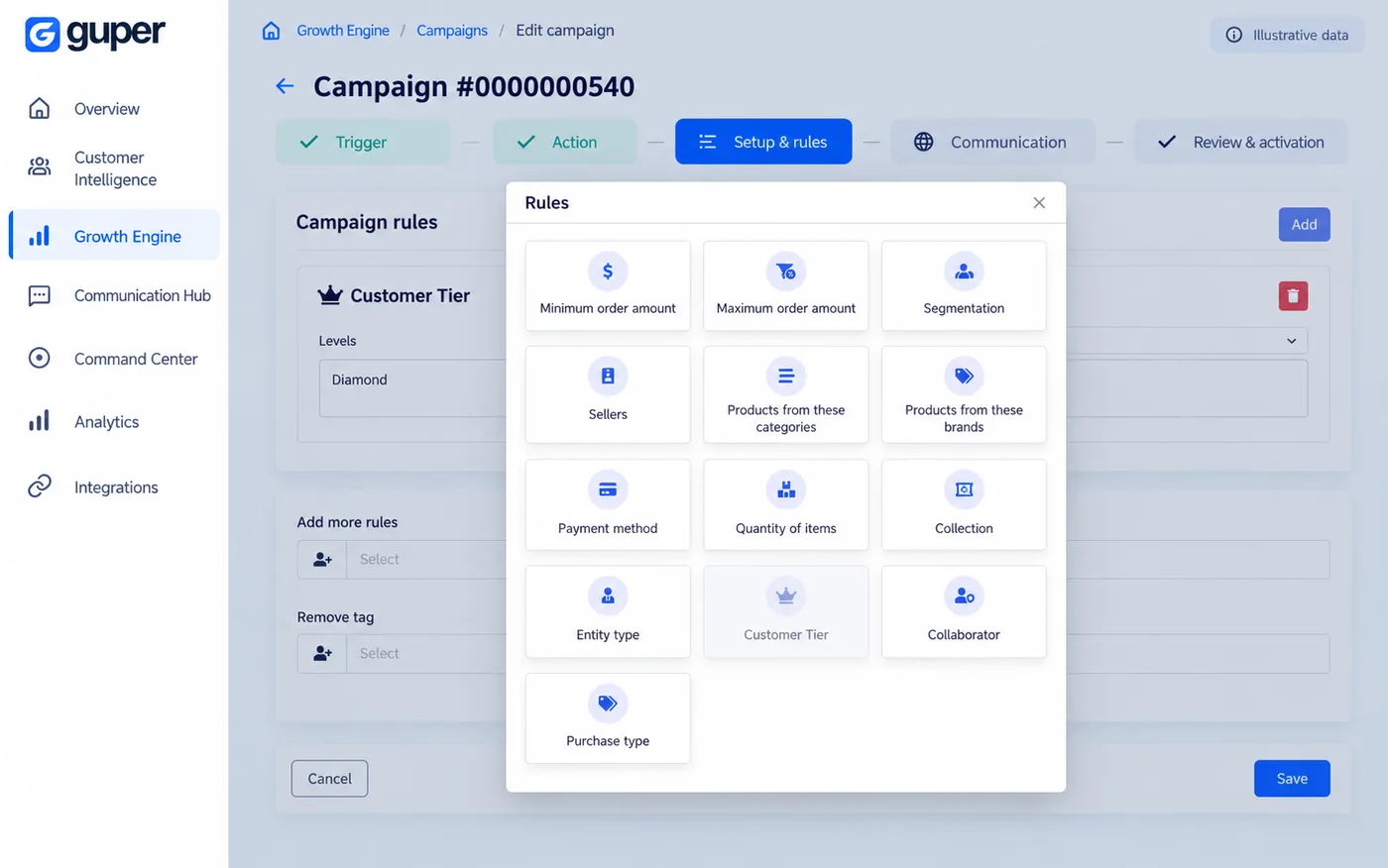
Keep the reward alive
A balance that expires unused is cost on the books with no visit. Activation, reminder and support all read the available balance and the expiry.
At day 20, anyone still holding a balance gets a reminder: high amounts by WhatsApp, low amounts by email. Anyone who already redeemed drops out.
What to track Redeemed balance against issued, and how much expires unused.
Communication Hub →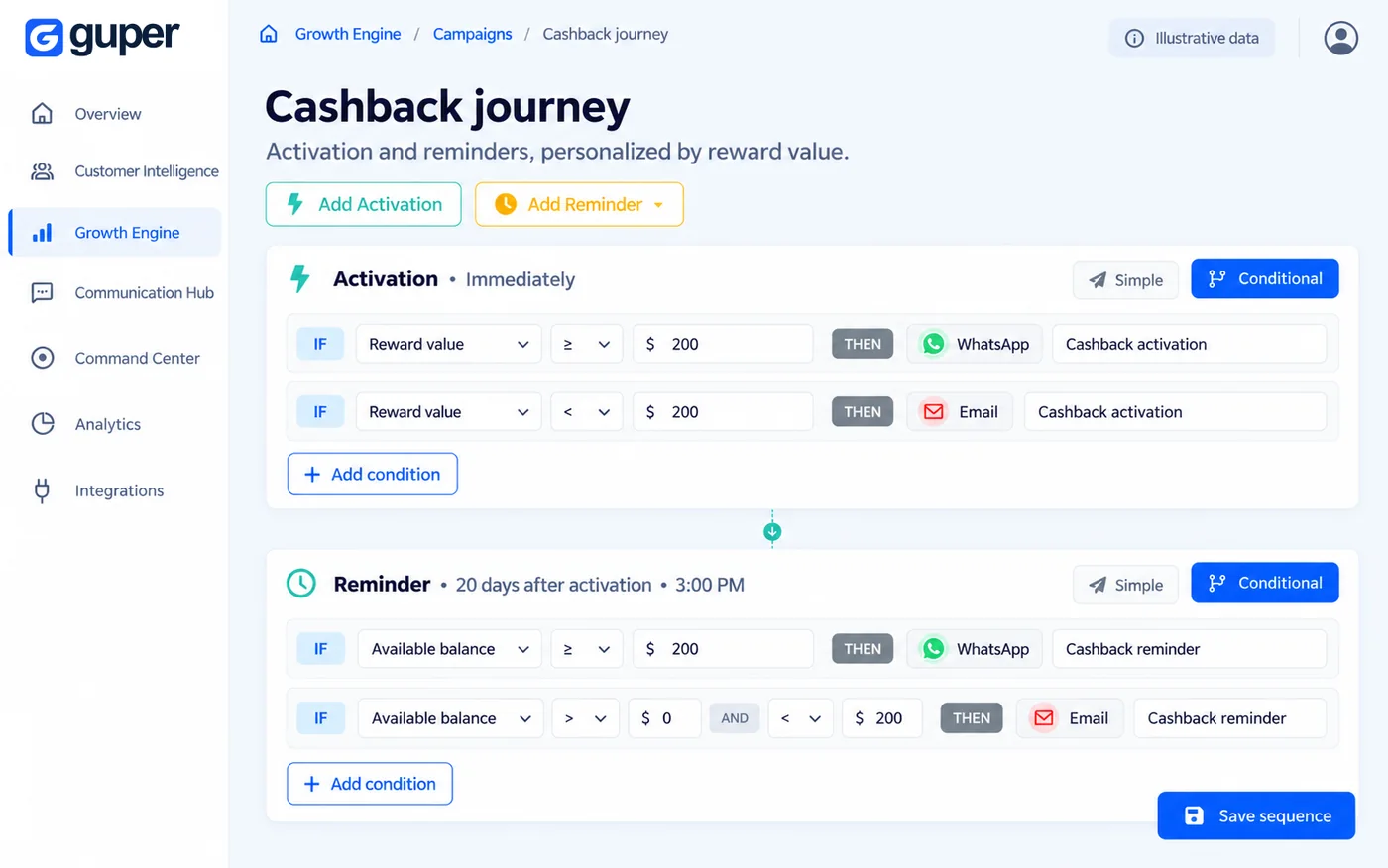
Make the associate part of the journey
When contact depends on each associate’s initiative, the relationship lives on a phone the brand does not own. The campaign builds the day’s list.
The list shows that store’s customers holding a balance about to expire, with the last purchase in view. The associate’s call is one option, not a required step.
What to track List coverage, and how much of the store’s sales those contacts account for.
Guper GO →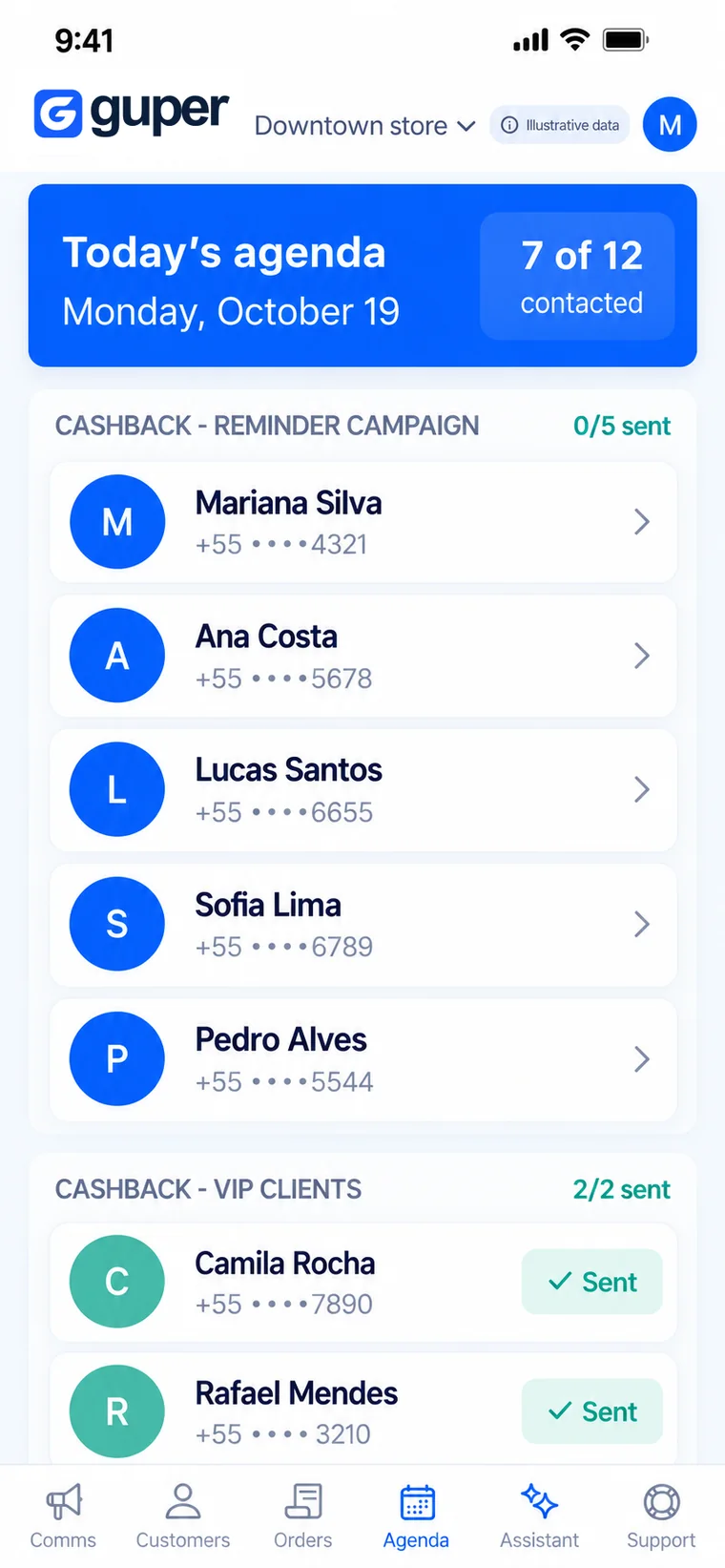
How a repeat-purchase strategy fits together
An illustrative example, from the store purchase to the return online.
Identified purchase
Mariana buys a bag in store and identifies herself at the till.
The reward is issued
The campaign rule sets the amount and the expiry.
The message goes out
How much she has, until when, and where to use it.
The reminder reads the balance
If she still has a balance, she enters. If she redeemed, she drops out.
The associate can step in
She appears on the day’s list. One option, not a required step.
She returns through the other channel
She applies the balance at checkout online. It is the same balance from the store.
The purchase updates the profile
And it feeds the read of the next journey.
The reward also needs commercial logic
Every variable moves the cost, the margin and the behaviour the brand is trying to trigger.
Percentage or fixed amount
A percentage scales with the basket; a fixed amount communicates better.
Expiry
Short concentrates the visit; long follows more spaced-out cycles.
Redemption cap
How much of the basket can be paid with balance. This is what protects margin.
Rules by product and category
Concentrate the reward where there is margin, or where stock needs to move.
Rules by store and channel
A location facing strong competition can run a different rule.
Stacking with other promotions
What happens when the customer already has a discount on top.
No single number works for every brand: it comes out of the basket, the frequency and the cost of each operation.
Two fashion brands, two different strategies
Measured against a control group. Every brand starts from its own baseline.

 50 stores · fashion
The problem A large base with very different behaviour across channels.
The strategy Membership tiers and cashback rules by channel.
USD 3.6 M in attributed sales
Alongside a 43% rise in annual purchase frequency.
See the full case →
 100+ stores · fashion
The problem Customers who bought once and never came back, across more than a hundred stores.
The strategy Post-purchase campaigns and reactivation on the same base.
+83% annual repurchase
The balance follows the customer, not the store where they bought.
See the full case →What people ask before getting started
How do we decide when a customer is inactive?
You can start with a fixed window, and for categories with an even cycle that is usually enough. When the base mixes very different profiles, it is worth setting the cut-off from each customer’s actual interval: someone who buys every six weeks and someone who buys twice a year should not enter at the same time.
Can I set different rules by store or channel?
Yes. The percentage, the expiry and the redemption cap are set by product, category, store, channel and customer profile, inside the same programme. That is what lets you test a rule in one location before rolling it out across the network.
How does my sales team take part?
Through Guper GO, the store team’s app. The campaign builds a list of who to contact, why and with what context, and marks anyone already contacted so nobody gets the same message twice. The associate checks the record and the balance before opening the conversation.
What if the customer only uses part of the balance?
The remaining balance stays on their profile with its expiry, and the sequences read it. Someone holding a partial balance can get a different reminder from someone who has redeemed nothing, and anyone who used it all drops out of the sequence.
How do we judge the result of a campaign?
The platform shows rewards issued and redeemed, conversion, and attributed and influenced sales. Those numbers are for running the operation, but they are not incrementality: to know how much sales exist because of the campaign, you compare against a control group.
What repeat-purchase opportunity is sitting in your brand?
Let’s look at how your customers buy and which first journey would make sense for your operation.
Book a demo