

Between one project and the next, the brand stays in the picture
Buying happens by project, and the silence between projects is not churn. Connect that history to incentives, outreach and personalised service so you are there when the next one starts.
Selling once does not mean the customer comes back
The challenge is not getting the customer to buy: it is still being on the list when they buy again.
Silence gets mistaken for churn
You reactivate people who never left, and burn the base on messages nobody asked for.
Several purchases at once, then nothing
The programme reads the pattern backwards and sends at the worst moment.
The next purchase in the project goes elsewhere
Whoever bought the sofa has a predictable purchase coming within weeks, and nobody goes after it.
Short expiry dates do not work
The balance expires before the next project even starts.
The reward expires without bringing anyone in
The cost was already paid and the visit never happened.
Store and e-commerce run on different data
The balance from the website is not recognised at the till.
Nobody knows which campaign drove the repeat purchase
Without a control group, all you can count is messages sent.
Five ways to build the next purchase
The project as the unit, not the single purchase
Three purchases in two weeks and then six months of silence is not a customer who left: it is a project that ended. Reading the pattern keeps silence from being treated as churn.
Someone who made several purchases in a row and has been away eight weeks does not enter reactivation: they enter a content journey, with the balance still valid.
What to track Purchases per project, and the gap between one project and the next.
Customer Intelligence →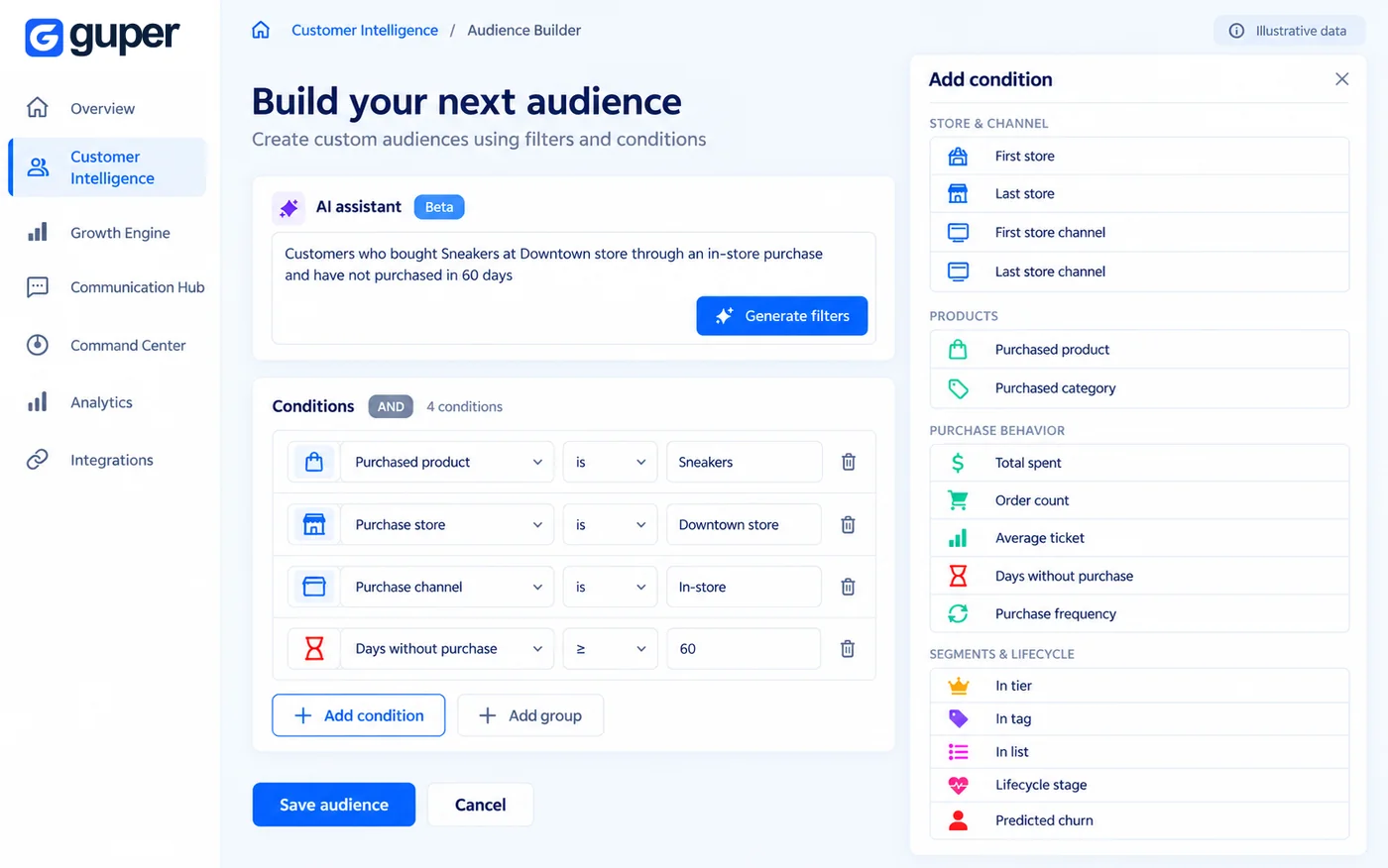
The next purchase in the project is predictable
Inside a project, one purchase points to the next. Whoever bought the sofa will need something else in the coming weeks, and that something gets bought wherever it is offered first.
Someone who bought living-room furniture in the last 45 days enters a journey scoped to lighting and textiles, the categories that usually finish that room.
What to track Categories per project, and the account’s total spend over the period.
Growth Engine →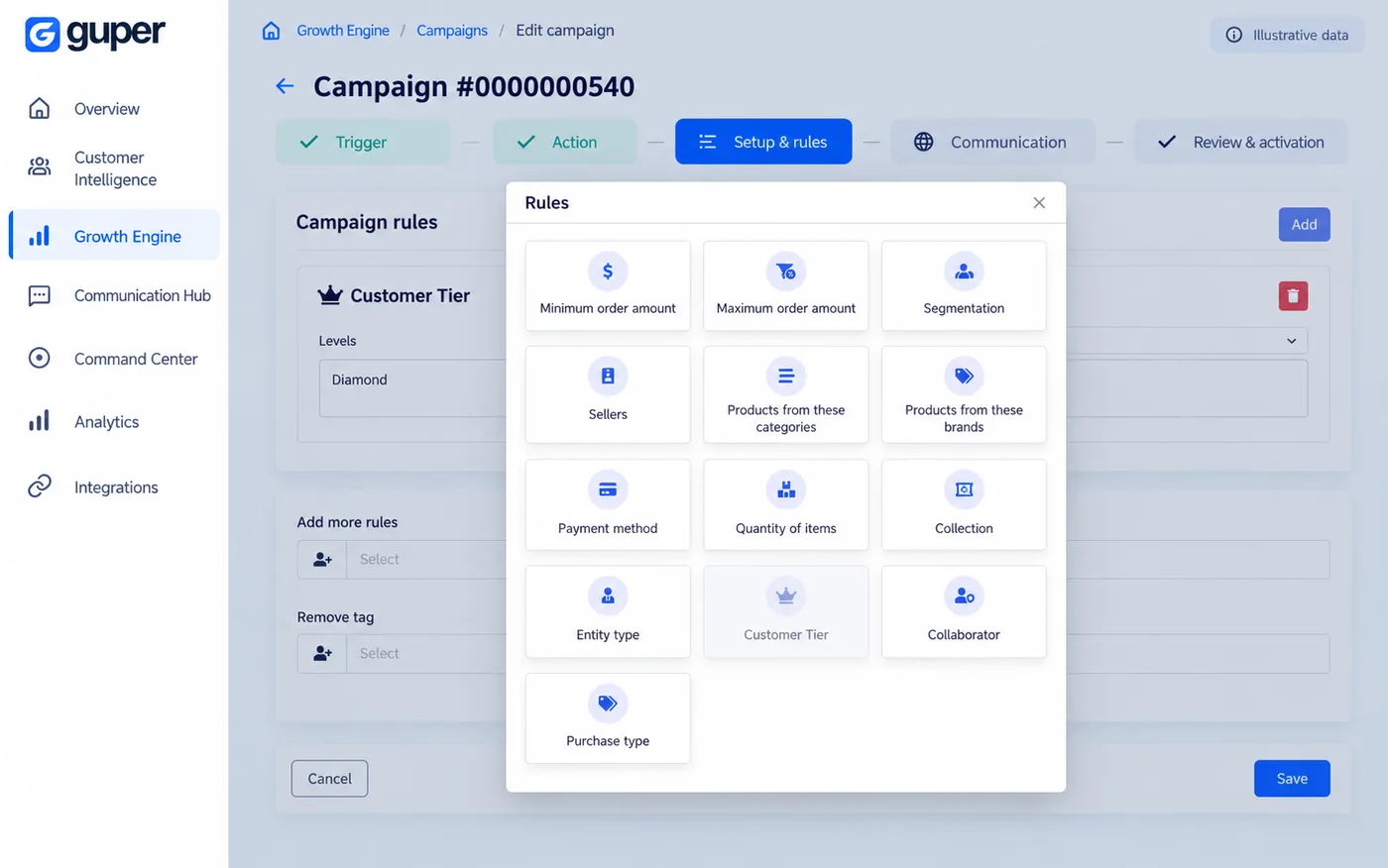
Expiry set to the cycle
A 30-day expiry works in a category bought every month. In project-based buying it only guarantees the balance expires unused.
The balance from a large purchase is issued with a long expiry and only kicks in after a few days, so it does not compete with the purchase just made.
What to track Balance that expires unused, and how long the redeemed balance takes to be used.
Growth Engine →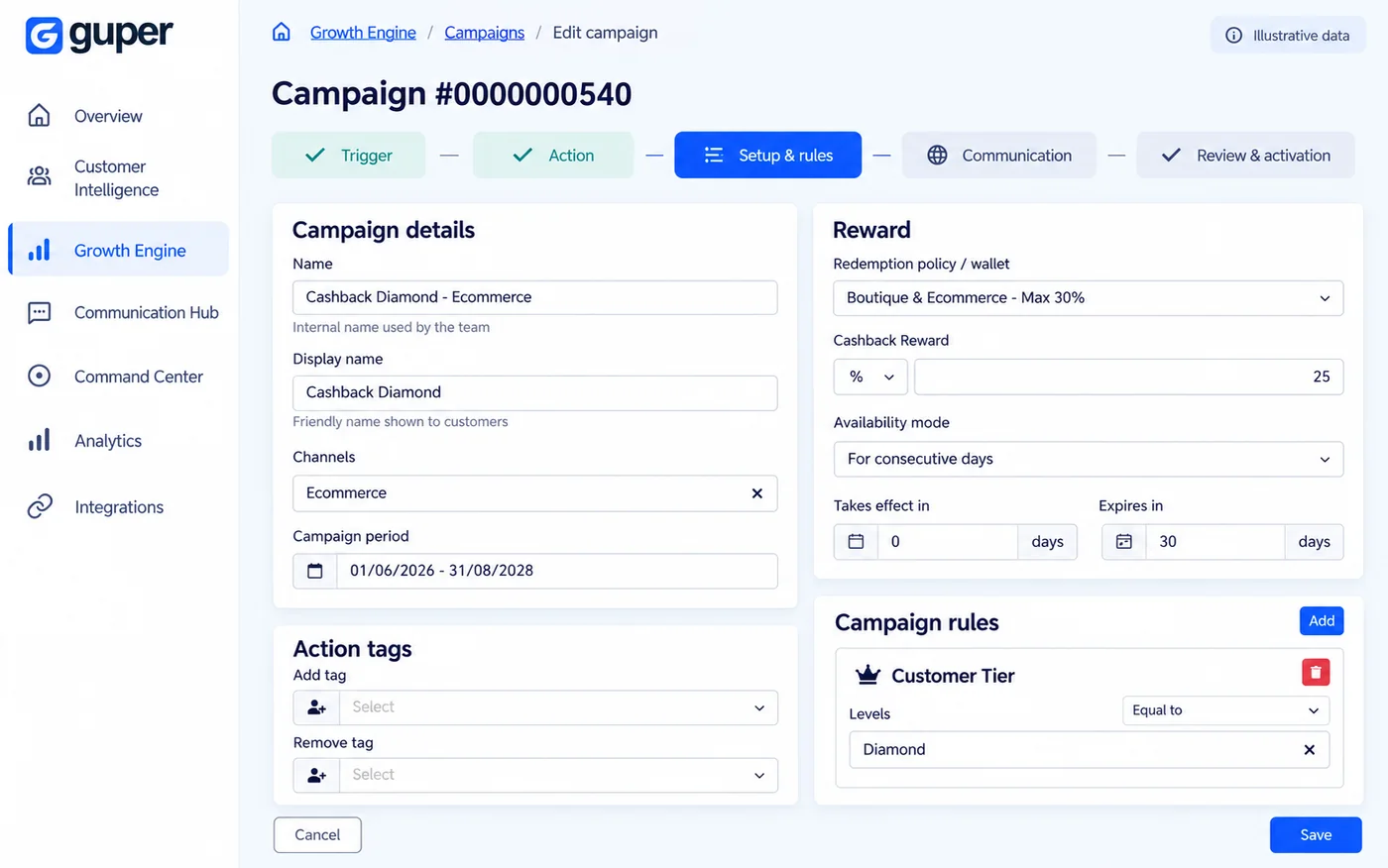
Keep the reward alive
A balance that expires unused is cost on the books with no visit. Activation, reminder and support all read the available balance and the expiry.
The reminder goes out as the expiry approaches, not every week. Anyone who already redeemed stops receiving it.
What to track Redeemed balance against issued, and how much expires unused.
Communication Hub →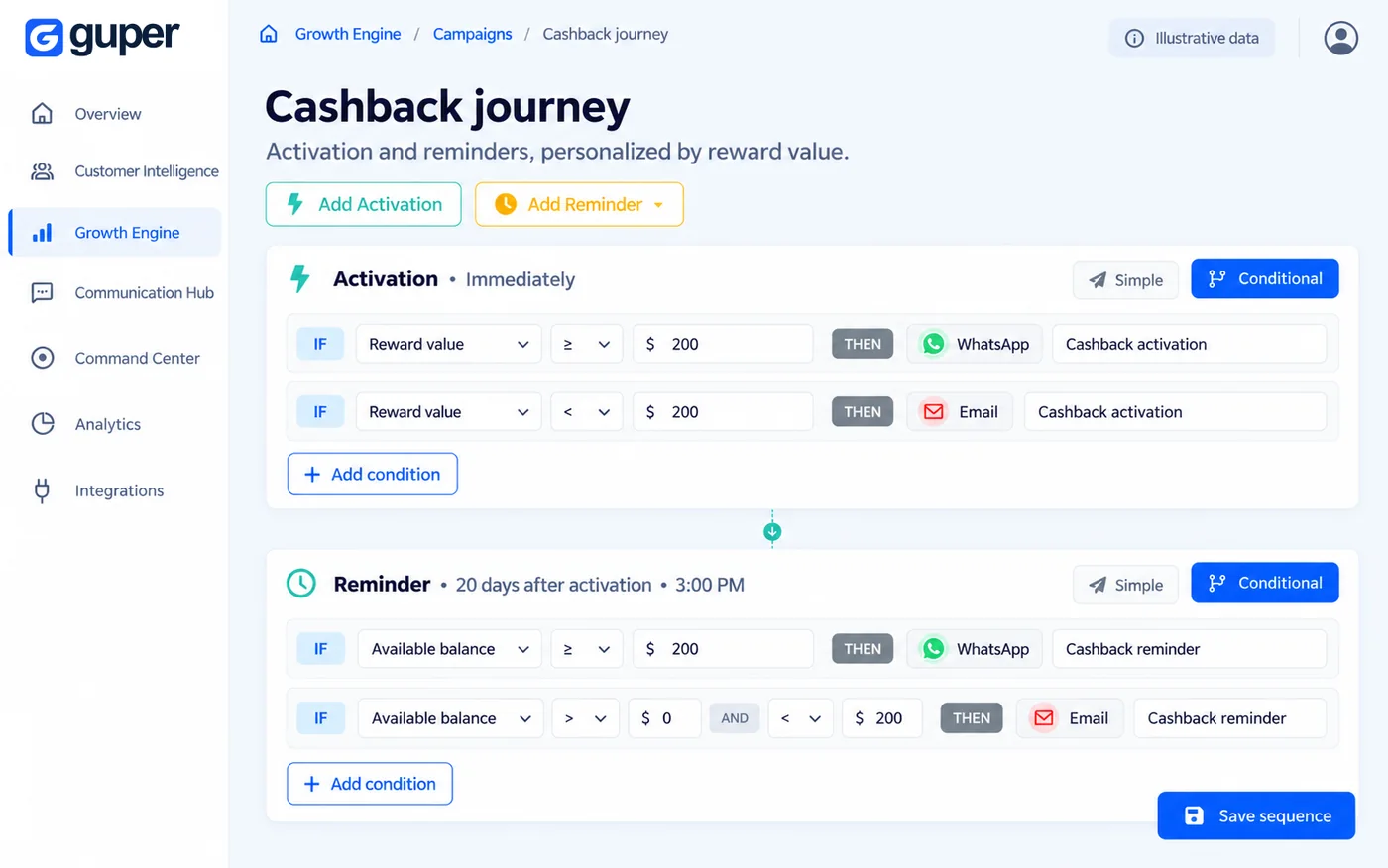
Make the associate part of the journey
When contact depends on each associate’s initiative, the relationship lives on a phone the brand does not own. The campaign builds the day’s list.
The day’s list shows customers with an open project and a live balance, with what they already bought in view.
What to track List coverage, and how much of the store’s sales those contacts account for.
Guper GO →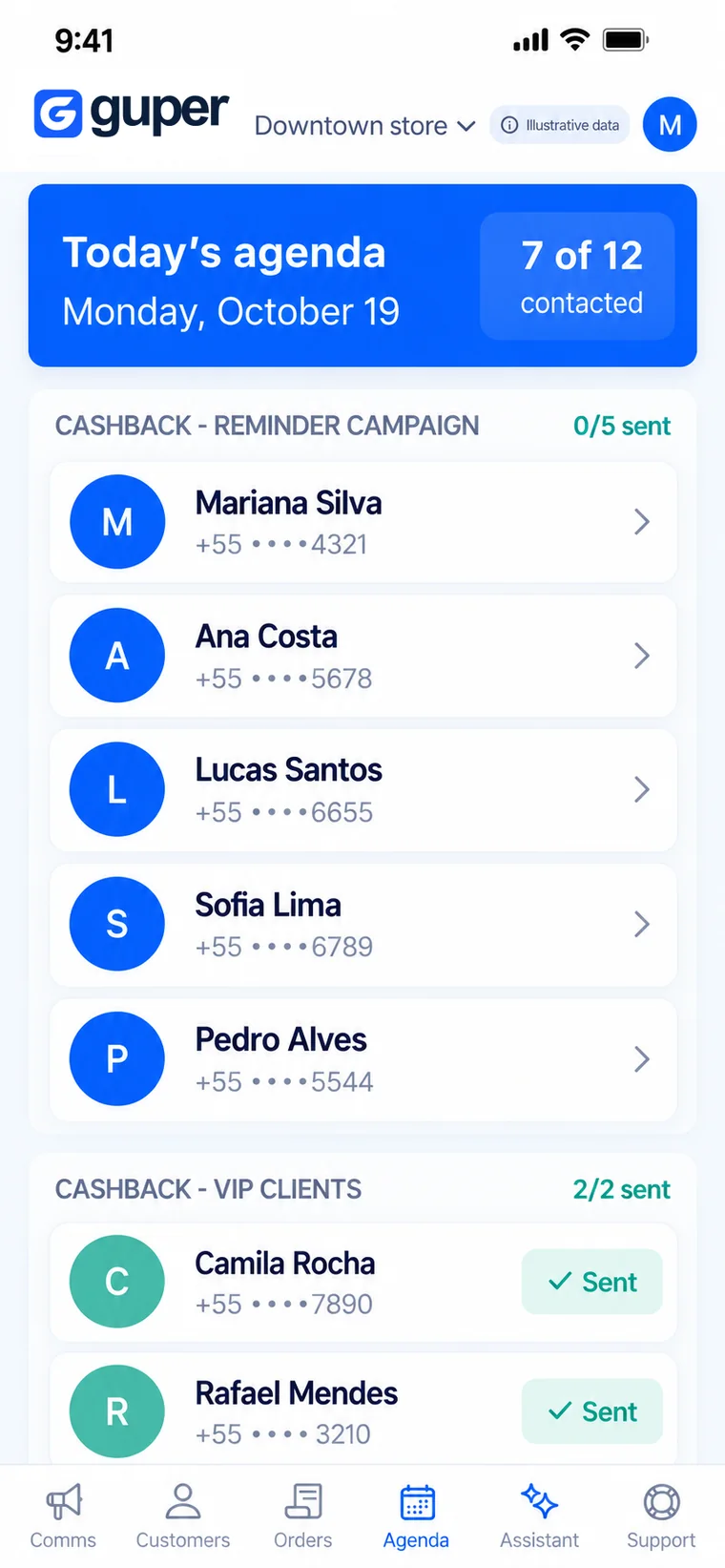
How a repeat-purchase strategy fits together
An illustrative example, from the furniture purchase to finishing the room.
Identified purchase
Daniel buys a sofa in store and identifies himself at the till.
The reward is issued
The campaign rule sets the amount and the expiry.
The message goes out
How much she has, until when, and where to use it.
The reminder reads the balance
If she still has a balance, she enters. If she redeemed, she drops out.
The associate can step in
She appears on the day’s list. One option, not a required step.
He comes back to finish the room
He goes online for lighting and applies the balance at checkout.
The purchase updates the profile
And it feeds the read of the next journey.
The reward also needs commercial logic
Every variable moves the cost, the margin and the behaviour the brand is trying to trigger.
Percentage or fixed amount
A percentage scales with the basket; a fixed amount communicates better.
Expiry
Short concentrates the visit; long follows more spaced-out cycles.
Redemption cap
How much of the basket can be paid with balance. This is what protects margin.
Rules by product and category
Concentrate the reward where there is margin, or where stock needs to move.
Rules by store and channel
A location facing strong competition can run a different rule.
Stacking with other promotions
What happens when the customer already has a discount on top.
No single number works for every brand: it comes out of the basket, the frequency and the cost of each operation.
Brands in this vertical
Retailers already running on Guper in this segment.

Runs on Guper in home, table and bath.

Runs on Guper in décor and home finishes.
What people ask before getting started
How do we decide when a customer is inactive?
In project-based buying a short fixed window usually fails: it marks as inactive anyone who simply finished their project. Read the account’s pattern instead, several purchases together and then a long pause, and set the cut-off from each customer’s actual gap between projects.
Can I set different rules by store or channel?
Yes. The percentage, the expiry and the redemption cap are set by product, category, store, channel and customer profile, inside the same programme. That is what lets you test a rule in one location before rolling it out across the network.
How does my sales team take part?
Through Guper GO, the store team’s app. The campaign builds a list of who to contact, why and with what context, and marks anyone already contacted so nobody gets the same message twice. The associate checks the record and the balance before opening the conversation.
What if the customer only uses part of the balance?
The remaining balance stays on their profile with its expiry, and the sequences read it. Someone holding a partial balance can get a different reminder from someone who has redeemed nothing, and anyone who used it all drops out of the sequence.
How do we judge the result of a campaign?
The platform shows rewards issued and redeemed, conversion, and attributed and influenced sales. Those numbers are for running the operation, but they are not incrementality: to know how much sales exist because of the campaign, you compare against a control group.
What repeat-purchase opportunity is sitting in your brand?
Let’s look at how your customers buy and which first journey would make sense for your operation.
Book a demo